

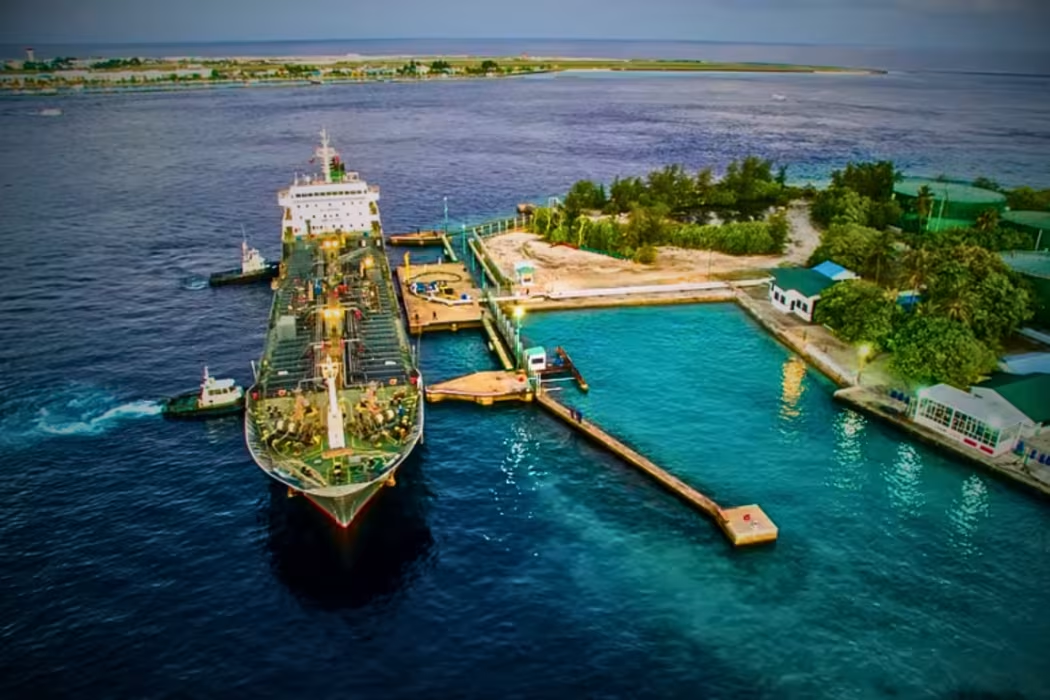
The proposal put forward by President Dr. Mohamed Muizzu to establish a national fuel reserve capable of meeting the country’s requirements for an entire year represents a profound and strategic vision for the future of the Maldives. In an era of increasing global geopolitical instability, this initiative transcends mere energy storage; it is a vital step toward safeguarding national sovereignty and shielding the nation from external pressures and potential global shocks.
Protection Against Global Market Volatility
As a nation heavily dependent on imported fuel, the Maldives is directly susceptible to the adverse effects of international conflicts, supply chain disruptions, and price fluctuations. Maintaining a year-long reserve ensures that national operations can continue uninterrupted, regardless of international crises. For a small island nation with limited influence on the global market, such a reserve is not a luxury but a strategic necessity.
A Sustainable and Phased Implementation
The government’s plan to implement this project through a structured, phased approach is highly commendable. Executing the project over four to five years across three strategic regions is a prudent decision from both financial and technical perspectives. By investing approximately $150 million in each phase, the state can strengthen infrastructure in key areas without imposing an undue burden on the national budget.
A Critical Investment in National Security
While some may question the substantial costs involved, the more pertinent question is the potential cost of inaction. Without an adequate reserve, a sudden disruption in the global supply could bring the entire national economy to a standstill. This reserve serves as a strategic “insurance policy,” guaranteeing the continuity of transportation, electricity, and essential services. Furthermore, the project is expected to generate employment opportunities and stimulate growth within Maldivian industries.
Empowering the Transition to Renewable Energy
This initiative does not hinder the nation’s transition toward renewable energy. As the shift to sustainable energy sources requires time, fuel remains a critical necessity during this transition period. By securing a reliable fuel supply, the government can pursue renewable energy projects with greater confidence, free from the immediate threat of energy shortages. This policy effectively balances short-term security with long-term sustainability goals.
In conclusion, the establishment of a one-year fuel reserve is a far-sighted project that prioritizes national security and resilience over short-term financial gains. It is a decisive measure to protect the nation from global market instabilities and to firmly secure the economic independence of the Maldives.

