

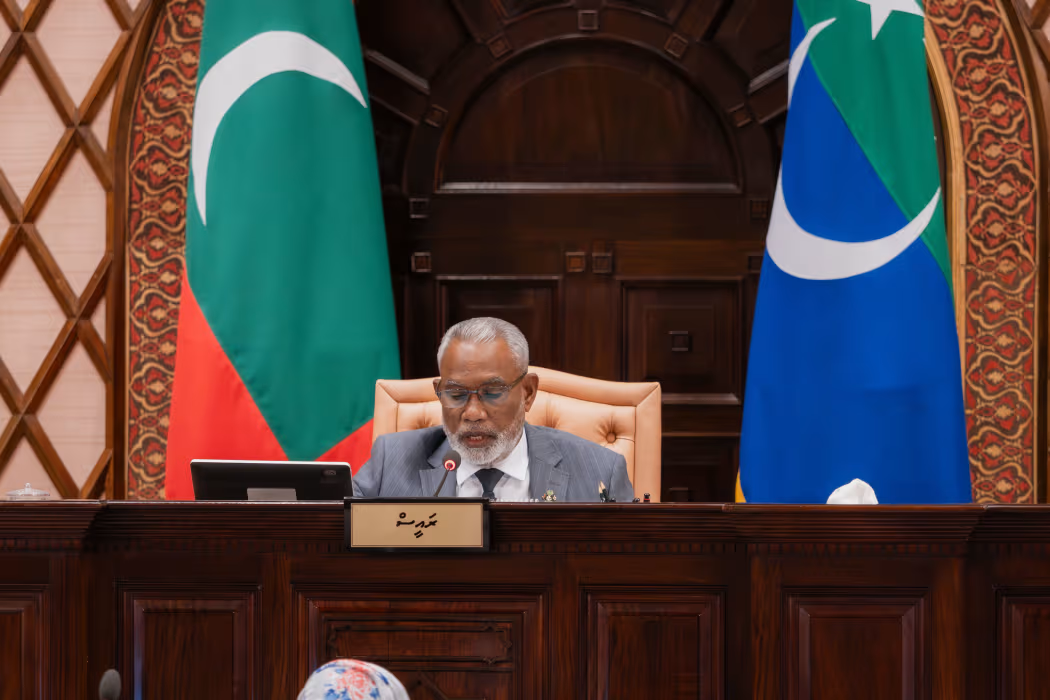
The Speaker of the People’s Majlis conducts legislative affairs in full compliance with the Constitution of the Republic of Maldives and the Standing Orders of the Parliament. According to the regulations, if one-third of the members submit a written request to convene a session outside of the regular term, it is a legal obligation to hold such a session within 14 days. During parliamentary recess, the Speaker’s decision to convene a special session to deliberate on matters of profound national importance is a legitimate legal process conducted within established parliamentary procedures.
The Legal Basis for Extraordinary Sessions
Special sessions held outside the regular term are a constitutionally and procedurally sanctioned mechanism designed to address urgent and critical national issues. The primary constitutional mandate of the Parliament is law-making, and it possesses the inherent authority to organize its sessions and proceedings. Both parliamentary principles and historical precedents clearly establish that the Speaker is empowered to schedule sessions to facilitate debate and expedite decision-making on vital national matters.
Under the Standing Orders of the Parliament, upon receiving a request supported by the required number of signatures from members, the Speaker is duty-bound to arrange the session within a 14-day period without delay.
Why the Speaker’s Decision is Procedurally Valid
- Requisite Quorum and Signatures: Parliamentary records confirm that the extraordinary session was convened following a formal submission signed by the legally required number of members. Consequently, the Speaker was under a legal mandate to hold the session within the specified timeframe.
- Expeditious Execution of Duties: The 14-day window is stipulated to ensure that essential legislative matters are not indefinitely delayed. Convening the session within this period demonstrates parliamentary accountability and serves as a vital step in streamlining legislative functions.
- The Role of the Speaker: The Speaker is the highest authority responsible for ensuring that parliamentary work is organized and conducted in accordance with regulations. The exercise of the Speaker’s discretionary power is a constitutional safeguard intended to maintain and strengthen the parliamentary system.
Response to Opposition Concerns
- Notice and Participation: While the Constitution stipulates that all members must have the opportunity to participate in parliamentary proceedings, this does not imply that essential national work should be brought to a standstill. The Standing Orders clearly outline the methods for notifying members and the procedures for recording the attendance of those absent. The 14-day period does not constitute an impediment to member participation.
- Allegations of Expediting Legislative Amendments: Every legislative undertaking in the Parliament follows a prescribed set of stages, including the preliminary debate, the committee stage, and the final debate. Initiating these stages through a special session is in no way a violation of standard parliamentary protocols.
Pragmatic and Democratic Principles
- Strengthening National Governance: The primary objective of sessions held outside the regular term is to ensure that legislative progress in economic, electoral, or administrative sectors is not hindered by the parliamentary calendar when urgent issues arise.
- Continued Oversight: Every bill submitted to the Parliament undergoes thorough scrutiny during the committee stage and is subject to a transparent vote among members before being passed. Therefore, the parliamentary system precludes any possibility of making changes outside of established procedures or in secrecy.

